I have been fascinated by a Simon Wardley idea about organisations, and I have been talking it over with my friend Aleksandar Simovic since. Wardley named the split aptitude and attitude in 2014: aptitude is the skill, and attitude is the kind of work a person thrives in. For an organisation, the attitudes are three.
His doctrine chapter gives the definitions:
- Pioneers “explore the never before discovered concepts, the uncharted land. They show you wonder but they fail a lot.”
- Settlers “turn the half-baked thing into something useful for a larger audience.”
- Town planners “take something and industrialise it taking advantage of economies of scale.” “You trust what they build.”
The missing dimension
The same split is missing from how an agent is defined. Definitions start the same way everywhere: “You are a senior software engineer.” That line is the aptitude. It does not say whether it is a pioneer, a settler or a town planner, and the model fills in the gap with its default, which is competent, unopinionated and in the middle of the range.
Naming both
One line in the definition does it:
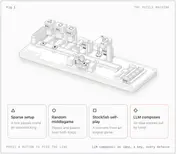
Aptitude: senior engineer. Attitude: town planner.And the contract changes in both directions. The pioneer takes a question and returns several rough attempts, some of which will fail. The settler takes the half-baked thing and makes it useful for a larger audience. The town planner takes the running system and industrialises it. Same senior engineer, three contracts.
You do not want a town planner when you are looking to innovate, and you do not need a pioneer when you are fixing a security or scaling problem. The row is picked by the work.
You can simply give an agent an aptitude. The same doesn’t work for humans, which is why Wardley writes about staffing rather than prompting. With people, the failure looks like what Aleksandar calls the flat line problem: one rulebook across a prototype and a hardening job, and the engineers argue about process. Are you a pioneer, a settler, or a town planner?