Featured
A Self-Maintaining Memory for Humans and AI
My local knowledge base has become the memory for everything I work on and every agent I work with, and it maintains itself. I packaged it up so you can use it too.
Read postCategory25 posts
Featured
My local knowledge base has become the memory for everything I work on and every agent I work with, and it maintains itself. I packaged it up so you can use it too.
Read postPosts
Eight AI bots assist me as a person: inbox, news, research and site metrics, all running on local models in the house. No cloud, no subscription.
The knowledge base gets semantic search: a 310 MB local embedding model, EmbeddingGemma 2 on llama.cpp, finds articles even when the words don't match.
I trained a model on 400,000 rated Lichess puzzles to predict how hard each dxc4.com puzzle is. It lands within about 210 rating points, and its best clue is a program that predicts what human players would play.
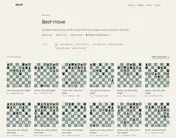
How Claude, Stockfish and an exact solver made 1,010 mate puzzles for dxc4.com: the model built the tools and picked the puzzles, the engines proved every one.

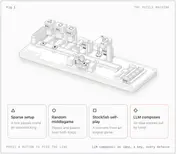
An interactive drawing of how the 1,010 mate puzzles on dxc4.com were made, built with Ryan's Anatomy skill for Claude: three hoppers on compute, an LLM on tokens, and one inspection head that decides what ships.
A 25-million-parameter language model trained from scratch, squeezed into 16 MB, and running entirely on a $25 ESP32: no cloud, no internet, just battery-powered text generation.

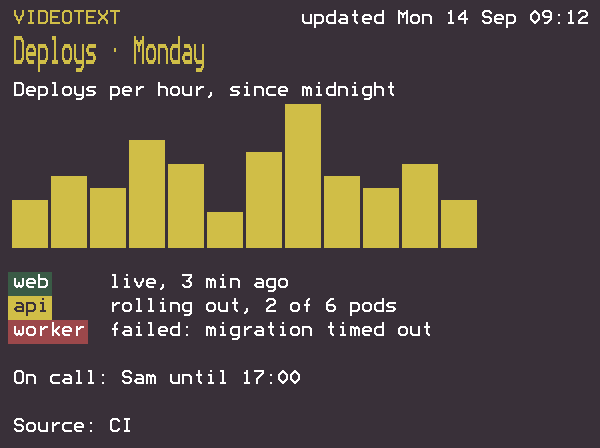
A teletext-style e-paper wall my family and my agents can put a page on, and why a slow, flat-colour panel and a format from 1984 suit each other.
A renewal notice marked a year of writing here and on LinkedIn. A moment to look back, not a verdict.
Markdown files have quietly become the connective tissue of AI-assisted work. I built Markdown Library ML-42, a native macOS app to browse, read, and edit them where they live.
I've kept a bullet journal for years. Then voice capture and AI synthesis introduced a different kind of journaling. For now, I'm keeping both.
Turning a fascination with strange attractors into an immersive audiovisual experience, from Playdate to iOS and macOS.
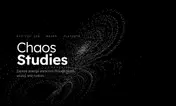
Building Field Bureau + Werkstatt, a minimal site born from a journal sketch and iterated into existence.

How shipping MIDI Volume Control proved that no project is too small to pivot when immediate user feedback points to the real product.
How a simple need—controlling my Mac's volume with a MIDI controller—led to building my first desktop app, now available on the App Store.

Building a free chess game analysis tool that stores everything in the URL—no servers, no databases, just instant analytics you can share with a link.

How I built a personal book collection website to solve the frustrating problem of tracking what I've already read.

Rock or Pop turns any YouTube playlist into a cassette tape you can label, design and send as a single link. No log-ins, no algorithms, just intentional listening.

A free hex map generator brought Weewar, one of the first browser strategy games, back to me. What the generator does, and why I keep coming back to hex grids.
The journey of creating a mind mapping tool that evolved from experimental prototypes to a full-featured product.
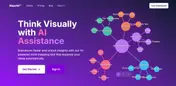
I asked AI to tell me what Not So Common Thoughts is all about.
How I built a music player for kohlhofer.com that pulls from a YouTube playlist, fetches video backgrounds, and focuses on an integrated audio/visual listening experience.
A fun exploration of chaos theory through code, creating an aesthetic visualization of the Lorenz attractor using P5.js.

How I built kohlhofer.com trying out a new approach to design and software development.
How I used code to create a natural-looking random pattern for board and batten siding, ensuring both aesthetic appeal and structural requirements.