Featured
A Self-Maintaining Memory for Humans and AI
My local knowledge base has become the memory for everything I work on and every agent I work with, and it maintains itself. I packaged it up so you can use it too.
Read postCategory33 posts
Featured
My local knowledge base has become the memory for everything I work on and every agent I work with, and it maintains itself. I packaged it up so you can use it too.
Read postPosts
Eight AI bots assist me as a person: inbox, news, research and site metrics, all running on local models in the house. No cloud, no subscription.
Understanding is becoming optional as skills get folded into AI models and harnesses; good judgment may be the last frontier — for a while, at least.
The job title says what an agent is good at, never how it should work. Aptitude and attitude, Simon Wardley's two axes, put the right mindset at the right time.
The knowledge base gets semantic search: a 310 MB local embedding model, EmbeddingGemma 2 on llama.cpp, finds articles even when the words don't match.
I trained a model on 400,000 rated Lichess puzzles to predict how hard each dxc4.com puzzle is. It lands within about 210 rating points, and its best clue is a program that predicts what human players would play.

How Claude, Stockfish and an exact solver made 1,010 mate puzzles for dxc4.com: the model built the tools and picked the puzzles, the engines proved every one.

An interactive drawing of how the 1,010 mate puzzles on dxc4.com were made, built with Ryan's Anatomy skill for Claude: three hoppers on compute, an LLM on tokens, and one inspection head that decides what ships.

A 25-million-parameter language model trained from scratch, squeezed into 16 MB, and running entirely on a $25 ESP32: no cloud, no internet, just battery-powered text generation.

A name for the way everyone writes now: writing shaped by what the algorithm rewards rather than by what the writer means.
LLMs stopped being bad at math by using a calculator. I spent a weekend turning Jev, a model that answers with a decision and a confidence and no reasons, into a tool for a regular LLM.
Modern houses use materials that pretend to be something they're not. The result looks right but feels wrong. AI output has the same problem.
Markdown files have quietly become the connective tissue of AI-assisted work. I built Markdown Library ML-42, a native macOS app to browse, read, and edit them where they live.

GTD is a judgment practice disguised as a productivity system. In the age of AI, that makes it more relevant than ever.
I've kept a bullet journal for years. Then voice capture and AI synthesis introduced a different kind of journaling. For now, I'm keeping both.
AI's rapid feedback loop is either energizing or exhausting. The difference is whether you're collaborating on one problem or being pulled apart by many.
AI makes everything possible and nothing restful. Staying intentional means acting on your terms — not reacting to every opportunity the moment it appears.
Working with AI has shifted my design process from building up to carving away, revealing the essential shape hidden within.
A practical approach to making AI actually useful: translate your company knowledge into a structured, version-controlled repository that AI can reason from.
Machine learning models across languages, molecules, and proteins are converging toward similar representations—a hint at underlying structure.
Unintentional imposters optimizing for output over outcome. AI just does it even better.

Visual UIs and chat interfaces have opposite strengths. The asymmetry isn't a problem to fix; it's a pattern to embrace.
Why the M-series neural engine may prove that Apple's so-called lag in AI is actually a head start in on-device intelligence.
In the age of AI, it's not the UI that becomes ephemeral—it's the software itself. Code manifests when needed and dissolves when purpose is served.
How AI has restored my ability to learn by doing, bringing back the joy of experimentation that growing responsibilities had made increasingly rare.
A reflection on the 'AI slop' debate, content overload, and why engaging with long-form writing matters more than ever.

While others were affirming that AIs could not truly think or even understand, I found myself wondering if I was any different.
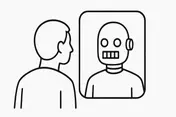
How our cultural narratives about AI might be shaping its development more than we realize

The journey of creating a mind mapping tool that evolved from experimental prototypes to a full-featured product.
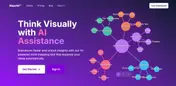
How and why I implemented the LLMs.txt standard to make this blog more accessible to AI tools.
A personal reflection on how AI-driven productivity gains should be reinvested in thinking, not just doing.

As AI removes technical barriers, judgement becomes the key differentiator.
How I built kohlhofer.com trying out a new approach to design and software development.